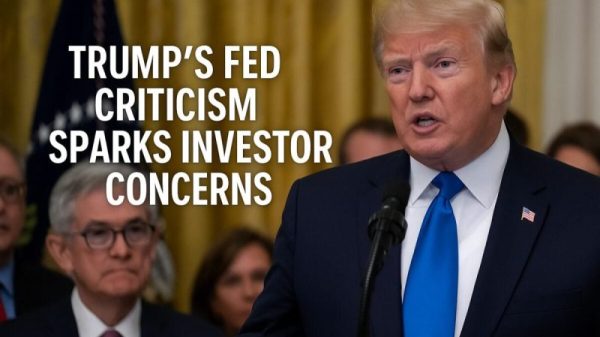















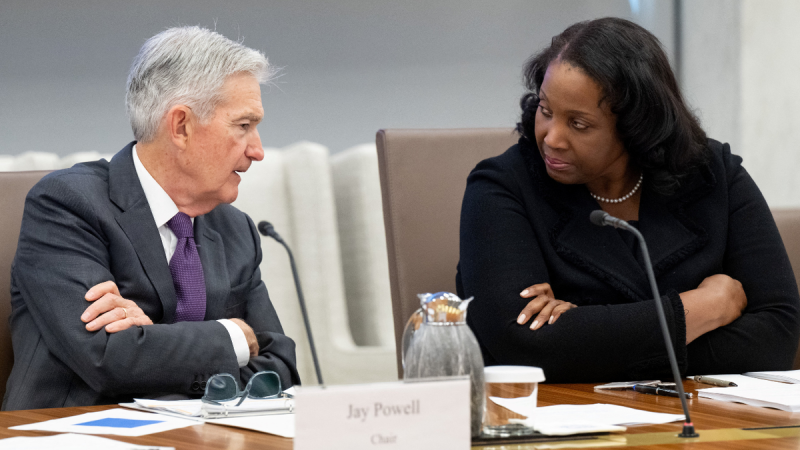
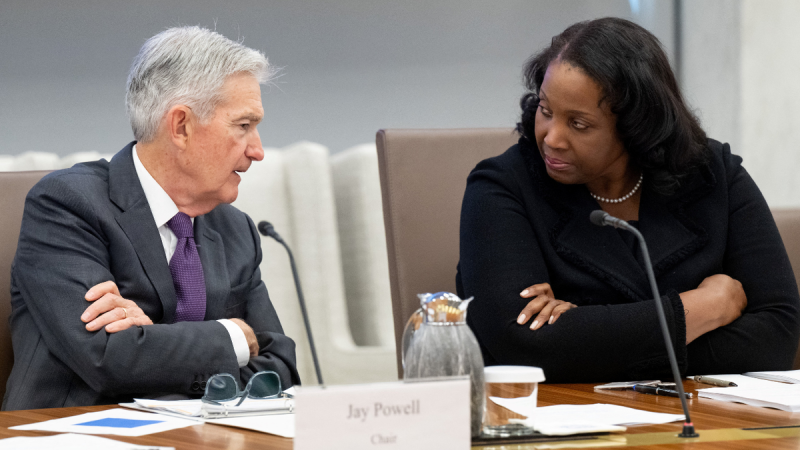
Federal Reserve Chair Jerome Powell warned Wednesday that a Supreme Court showdown over sitting Fed governor Lisa Cook could have far-reaching consequences for the central bank’s independence and the U.S. economy.
‘I would say that that case is perhaps the most important legal case in the Fed’s 113-year history. As I thought about it, it might have been hard to explain why I didn’t attend,’ Powell told reporters Wednesday at the Federal Reserve.
‘Paul Volcker famously attended a Supreme Court case in, I guess, 1985 or so, so there is precedent,’ Powell said, referring to the former Federal Reserve chair who served under Presidents Jimmy Carter and Ronald Reagan.
Last week, the nation’s highest court heard oral arguments for two hours on whether President Donald Trump has the authority to remove Cook from the Federal Reserve’s Board of Governors. The court is expected to issue a ruling in the case by summer.
Cook’s legal fight traces back to late August, when Trump said he was firing her from the board.
He alleged she misrepresented information related to a trio of mortgages she obtained before joining the central bank. Cook has denied any wrongdoing and has not been charged with a crime.
She sued Trump in federal court in Washington, D.C., to block her removal. On Sept. 9, a district court judge barred Trump from firing her while the case proceeds, a decision later upheld by a federal appeals court.
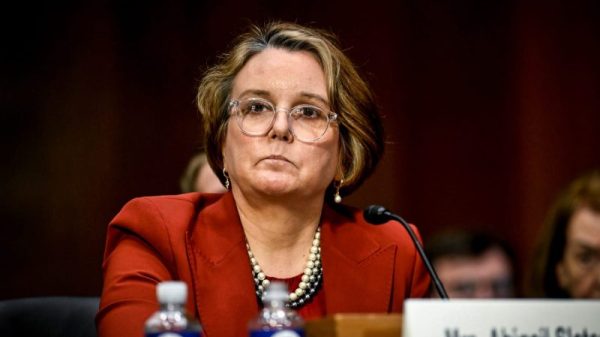
Her ascent to the Federal Reserve was historic from the start. Appointed by former President Joe Biden in 2022, she became the first Black woman to serve as a Fed board governor, the seven-member panel that sets national interest rates and oversees the banking system.
Now, she stands at the center of an even more consequential moment, as Trump seeks to fire her — a step that would be unprecedented in the Fed’s history.
What’s more, Powell’s long-standing insistence on finishing his term, which ends in May, now comes amid a Justice Department criminal investigation into his congressional testimony on the Federal Reserve’s headquarters renovation.
Powell confirmed the investigation and said he respected the rule of law and congressional oversight, but described the action as ‘unprecedented’ and driven by political pressure.
Asked by reporters at the Federal Reserve for further comment, Powell declined to discuss the Justice Department investigation, pointing instead to remarks he made in a video statement on Jan. 11.
His decision to address the issue so publicly, after days of private consultations with advisors, marked a sharp departure from the central banker’s typically measured approach.
What comes next remains unclear, as the Federal Reserve navigates largely uncharted territory.